A life beyond the tanks.

Born in captivity, Wikie and Keijo deserve a better future. Second Nature is exploring whether a permanent open-water sanctuary in Scotland could offer them one.

Their story

Captivity shaped their lives.

It should not define their future.

Second Nature is an initiative working towards permanent, welfare-led sanctuaries for animals who have spent their lives in captivity.

Scottish Wild Sanctuary is its current project, and a working name: a proposal to investigate whether a permanent, welfare-led open-water sanctuary in Scotland could give previously captive orcas a better life, with the professional care they will always need.

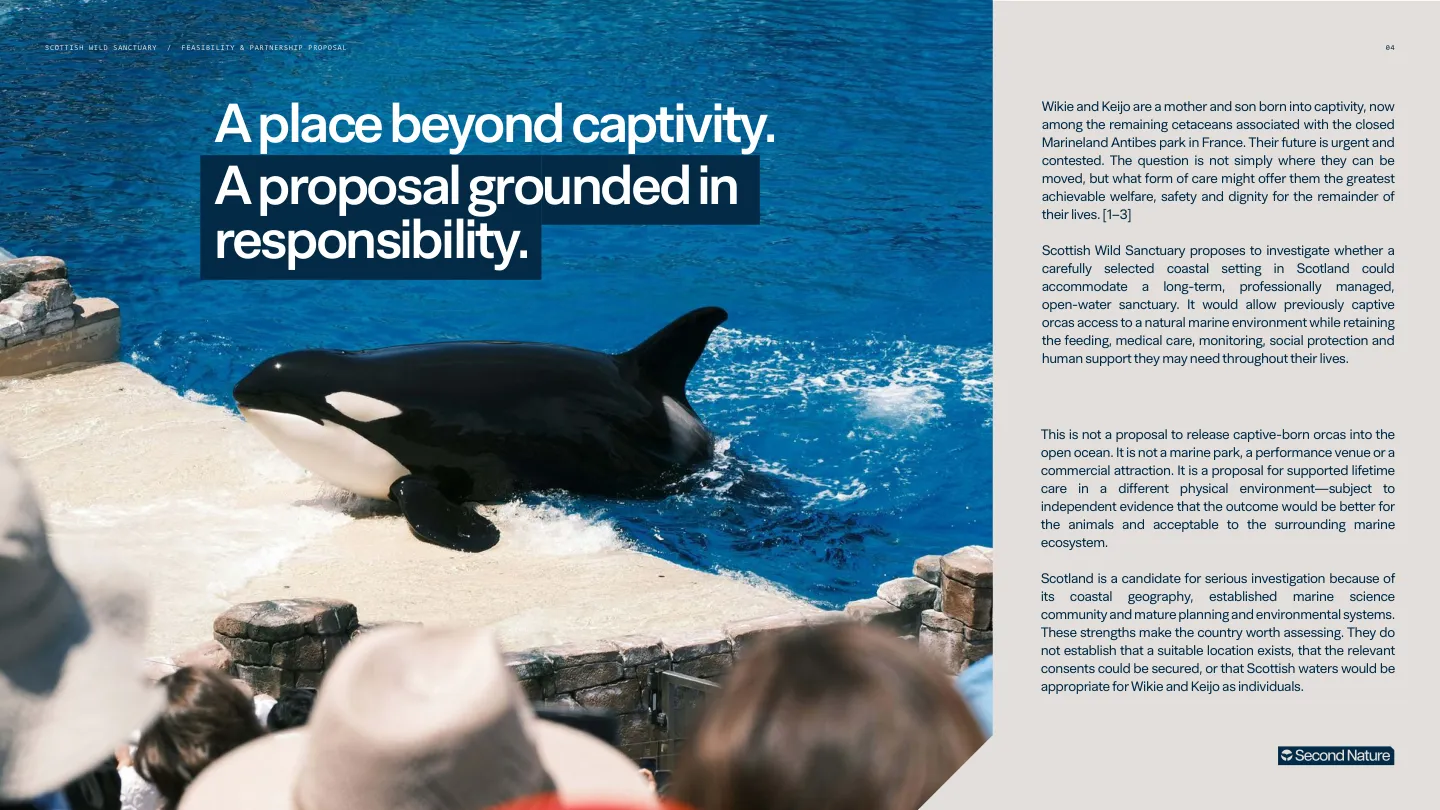
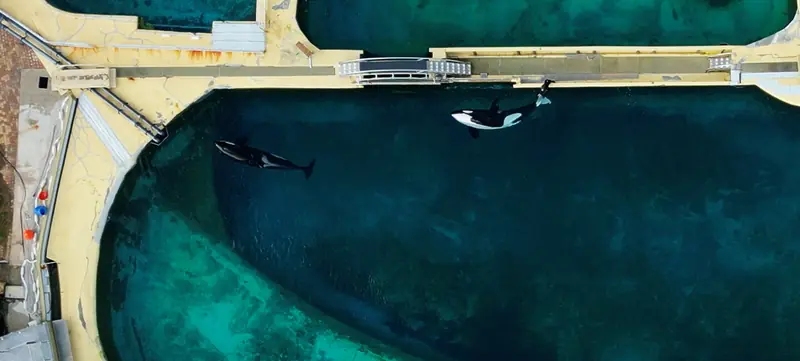
Aerial view of a large concrete orca pool at Marineland Antibes, with two orcas swimming near the surface.
The orca pools at Marineland Antibes, France.

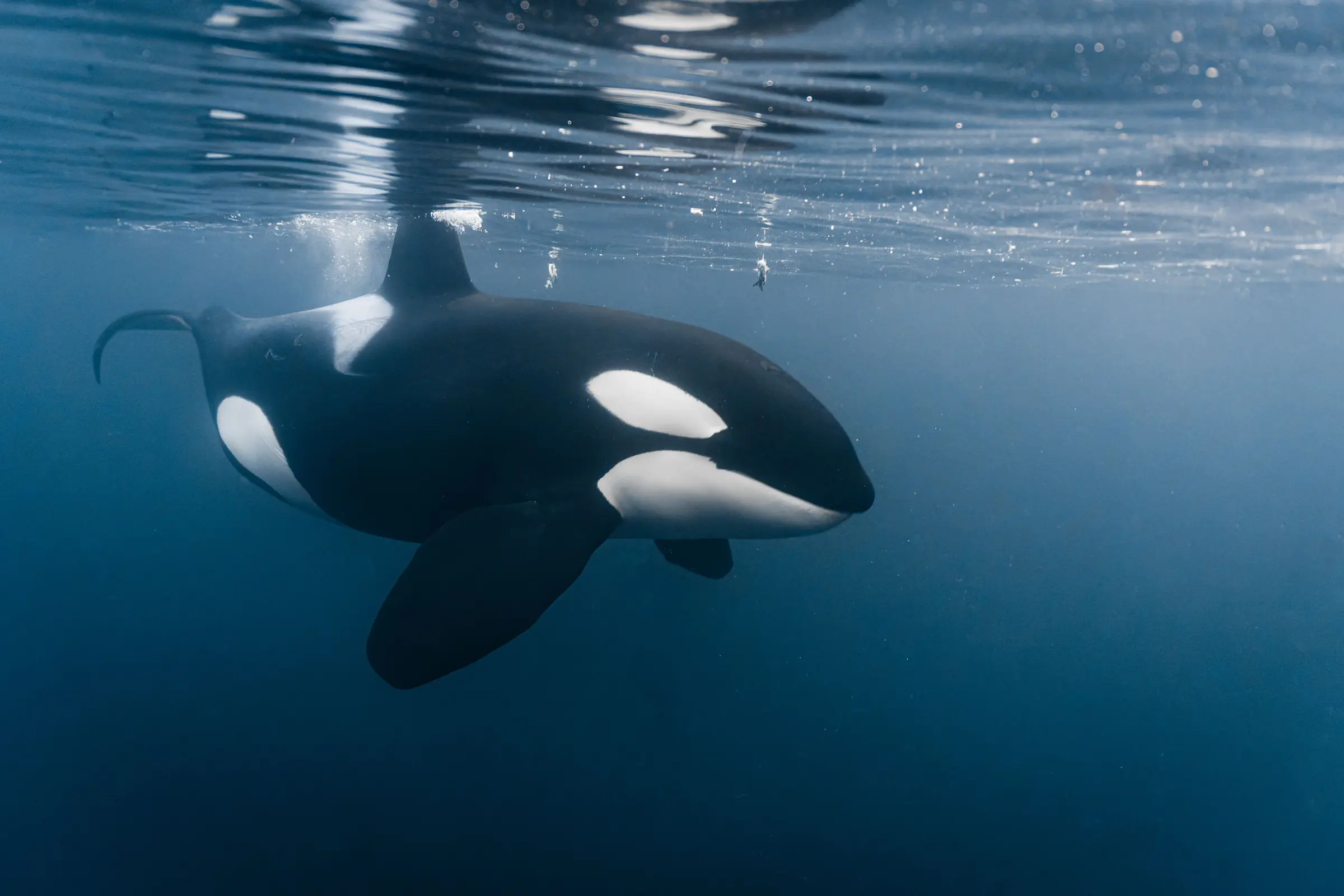
Wikie & Keijo.

They are among the last cetaceans associated with Marineland Antibes, the French marine park that ceased operations in January 2025.

Their future is urgent and contested. The question is not simply where they could be moved, but what kind of care could give them the greatest achievable welfare, safety and dignity for the rest of their lives.

Their relationship, their histories and their individual needs must shape whatever happens next.
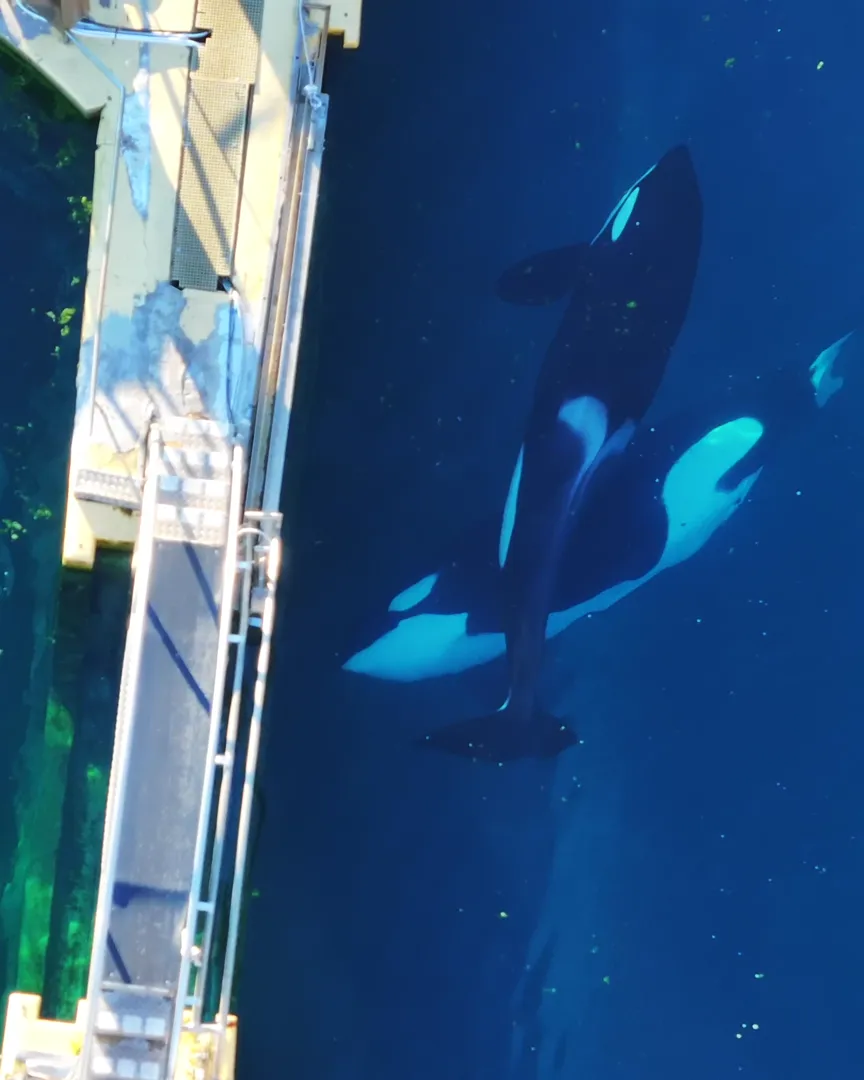
Wikie & Keijo. Marineland Antibes. Credit: TideBreakers.

Where things stand in France.

Last verified 12 November 2026, against the primary sources linked below.

  1. 2021

    France passes Law No. 2021-1539, restricting the keeping of cetaceans in dolphinaria from 1 December 2026, subject to defined exceptions.

    Légifrance, Law No. 2021-1539 (opens in French, in a new tab)

  2. 2024

    The government runs an international call for sanctuary proposals for Marineland’s cetaceans. In September 2026 the ministry said none had offered a credible solution on funding, site and timing.

    IGEDD mission report, June 2024 (opens in French, in a new tab); Written question 16594, answered 29 September 2026 (opens in French, in a new tab)

  3. January 2025
  4. 15 May 2026

    The ecology ministry says the State has given its go-ahead for the orcas to be transferred, and names Loro Parque in Spain as the best viable option. It cites serious structural risks in the Marineland pools.

    Ministry statement, 15 May 2026 (opens in French, in a new tab)

  5. 29 September 2026

    Answering parliamentary questions, the government says a transfer to Loro Parque offers the best prospects for feasibility and timing.

    Written question 16594, answered 29 September 2026 (opens in French, in a new tab); Written question 13240, answered 29 September 2026 (opens in French, in a new tab)

Status as of 12 November 2026

Government-preferred destination
Loro Parque, Tenerife, Spain.
French authorisation
Announced by the ministry in May 2026. We have not found a published authorisation document.
Agreed placement
Not confirmed in any primary source we found.
Completed transfer
No primary source we found reports one.

The proposal, issued 4 November 2026, records that no solution had been agreed at that date.

A new sanctuary in Scotland could not be ready in time to meet the immediate situation in France. Two decisions must be kept separate: Wikie and Keijo’s immediate welfare and safety, and whether Scotland can develop a responsible sanctuary model over a longer period.

The French context, p. 8 (opens the PDF in a new tab). Full source list in Appendix D of the proposal (opens the PDF in a new tab).
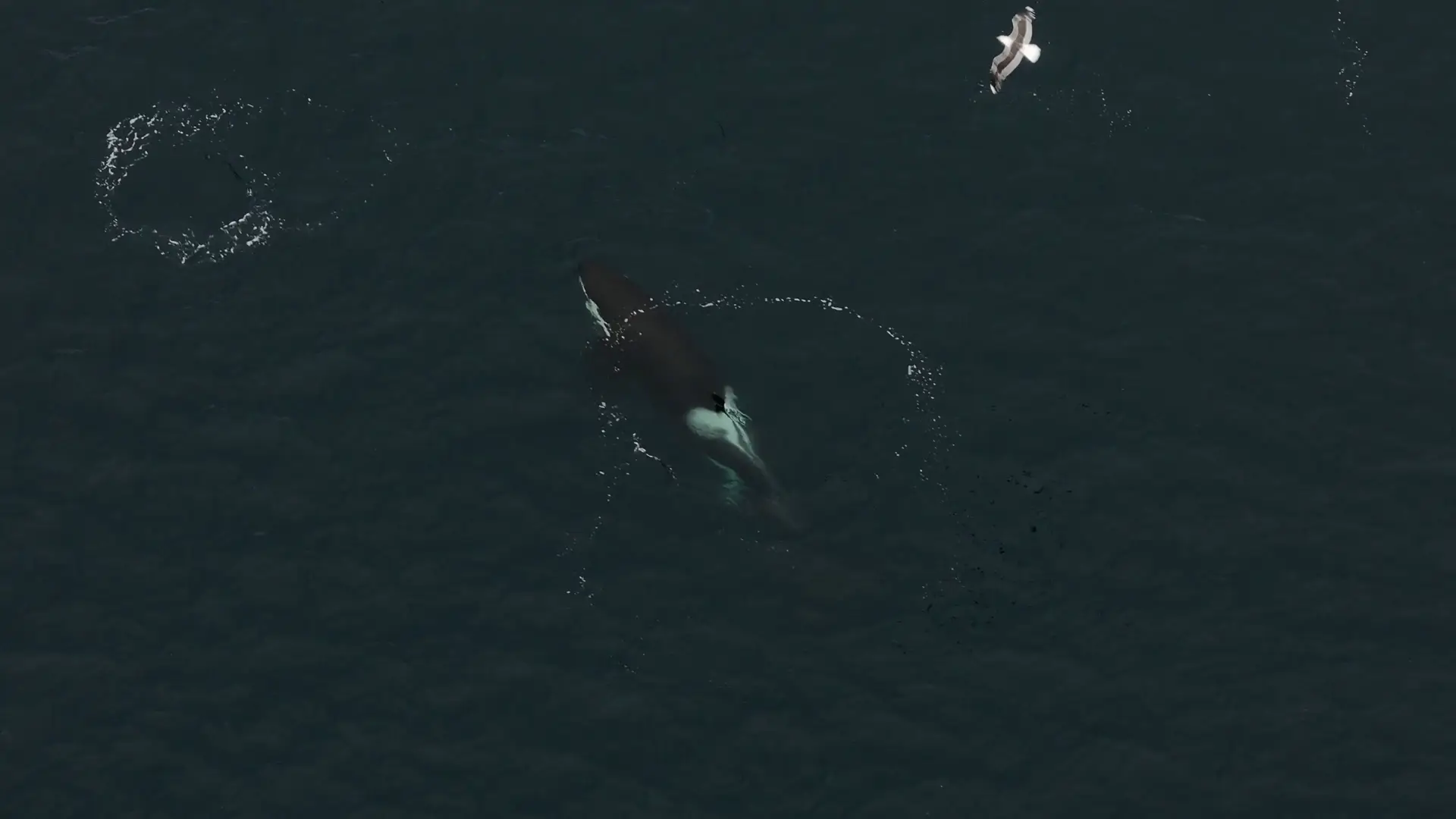
They may never be able to live independently in the wild.

They deserve more than a life in concrete pools.

Between the wild and the tank, could there be a better life?

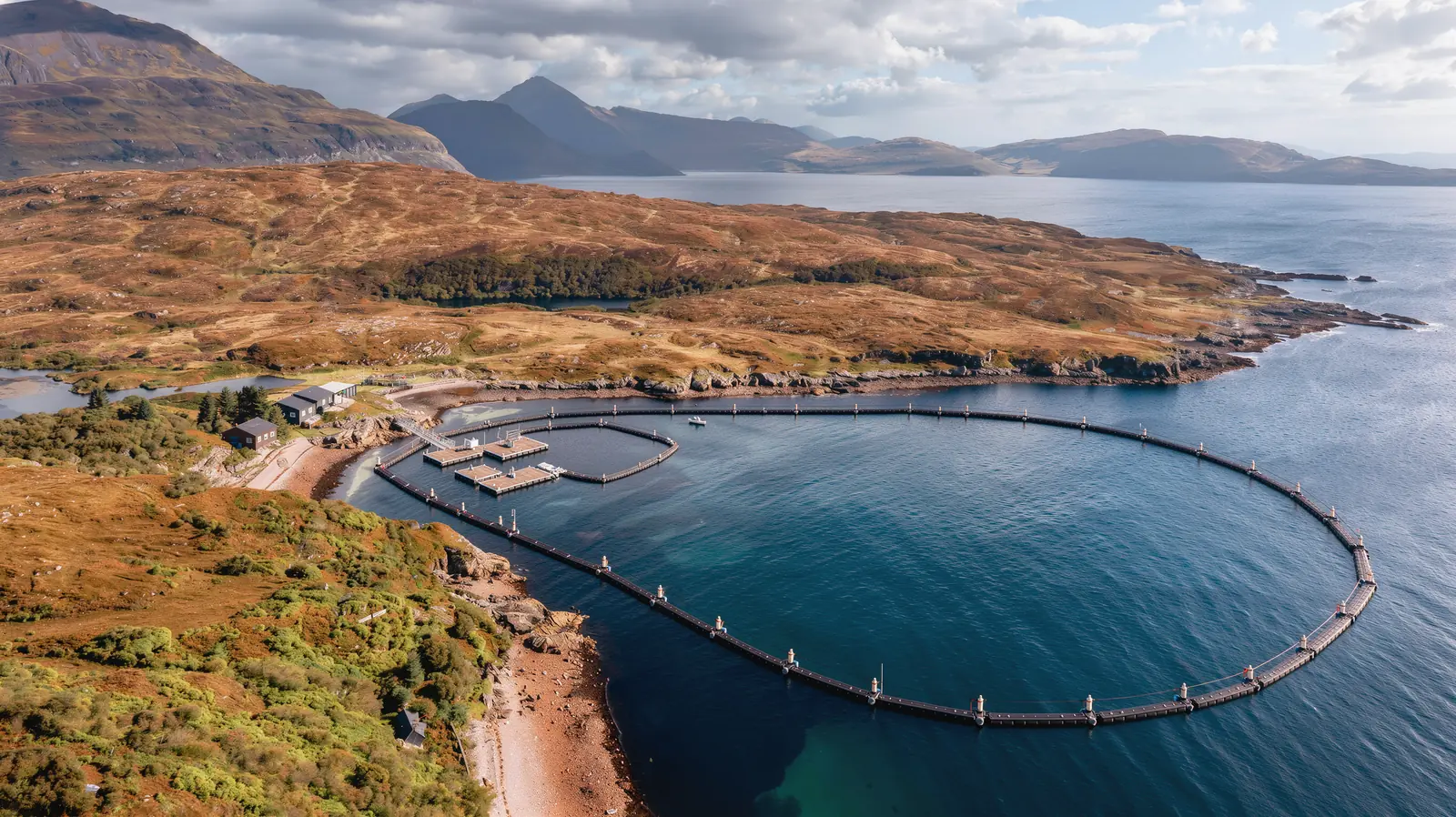
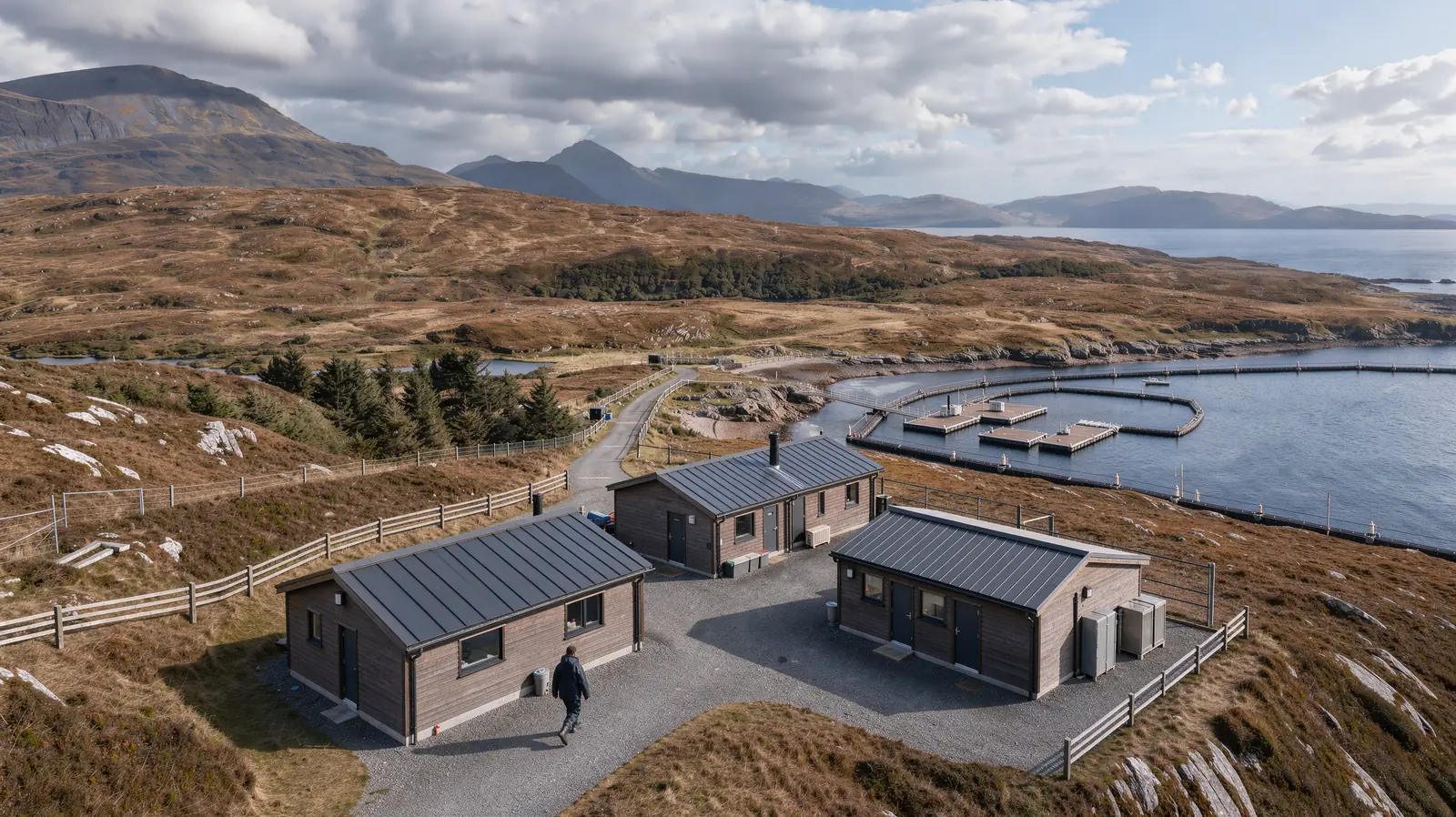
Concept visualisation: a large, curved open-water enclosure in a Scottish sea loch, with a small shore base beside it.
Concept visualisationIllustrative. No site or final design has been selected.

A different future is possible.

A proposal to study a protected open-water enclosure on the Scottish coast, supported by a land-based clinical and operational base.

Sanctuary does not mean the end of professional care. It means care designed around the animals, in a different environment.

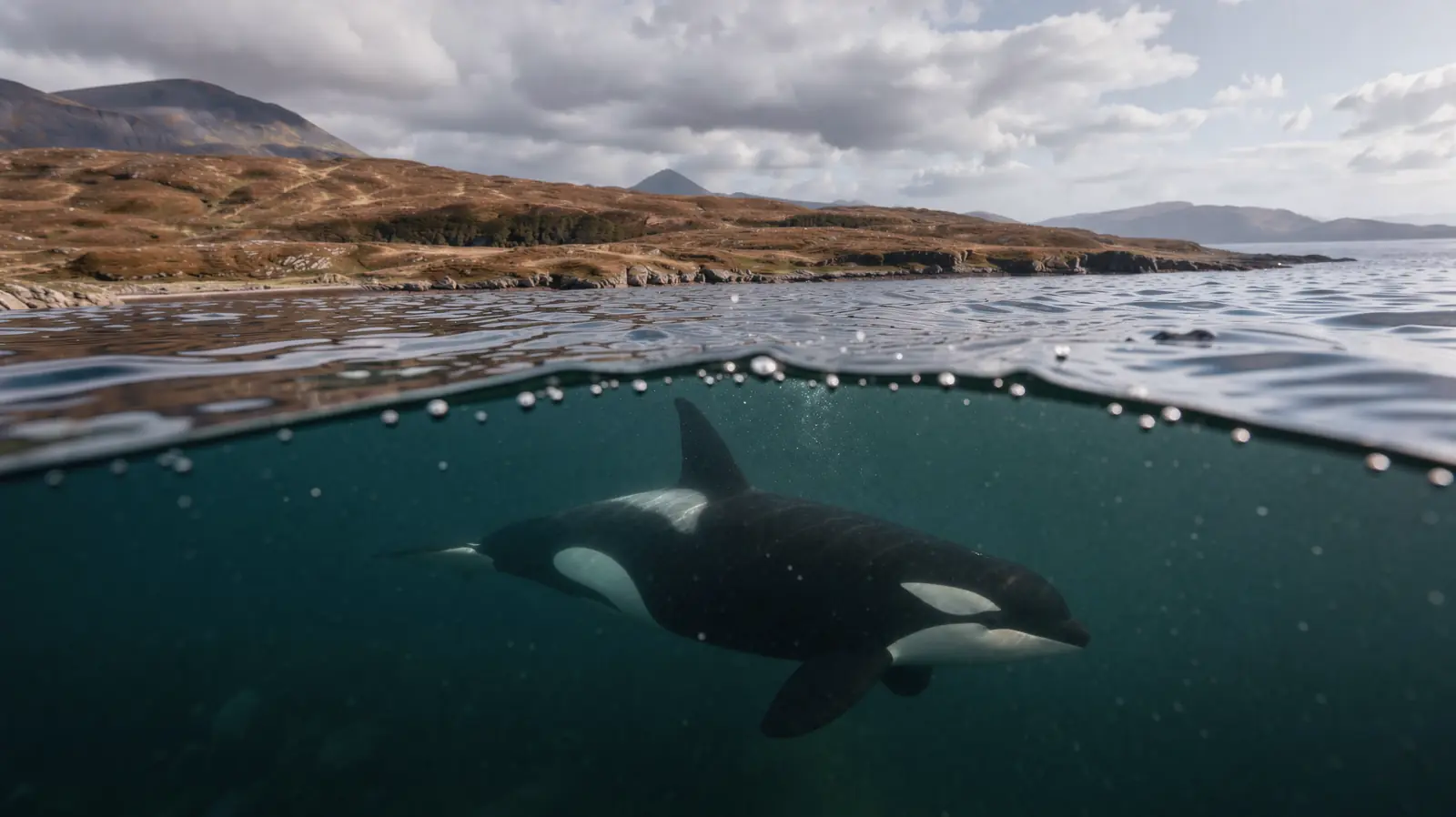
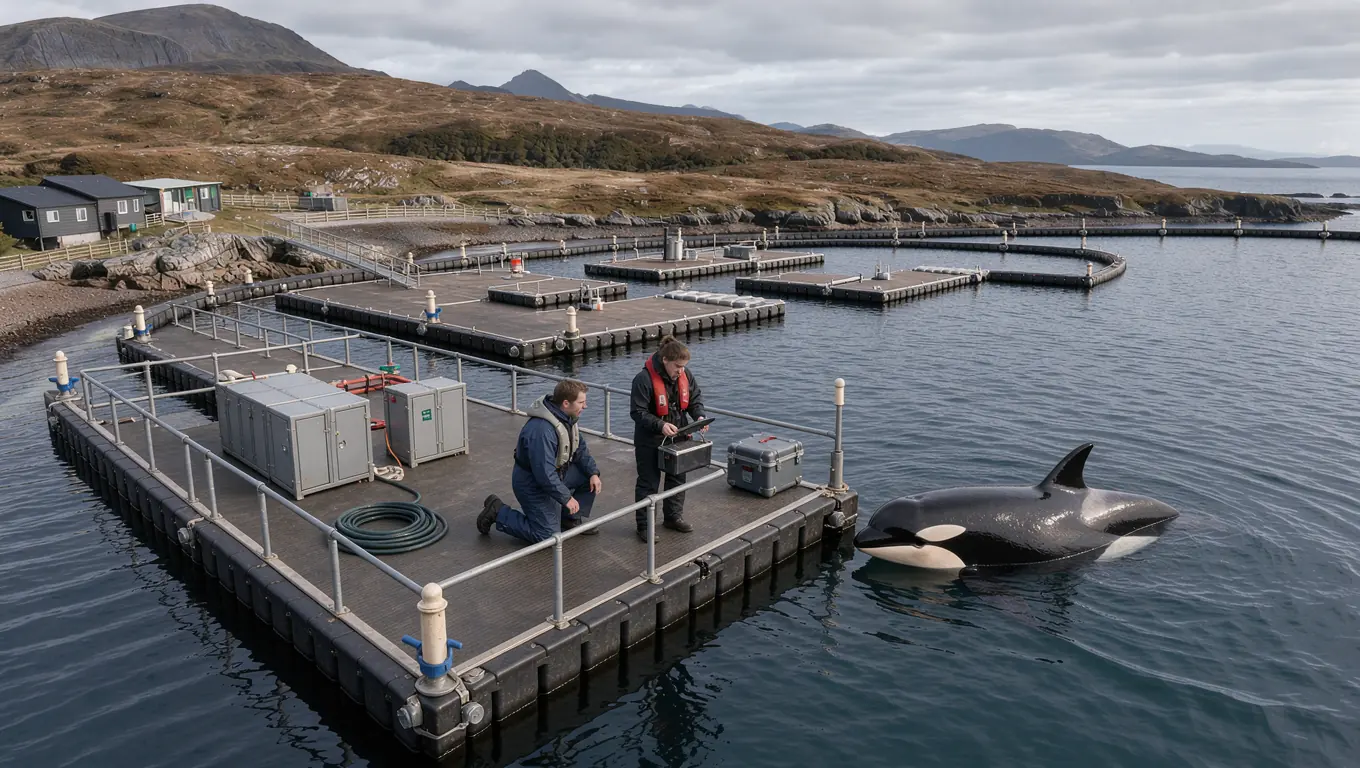
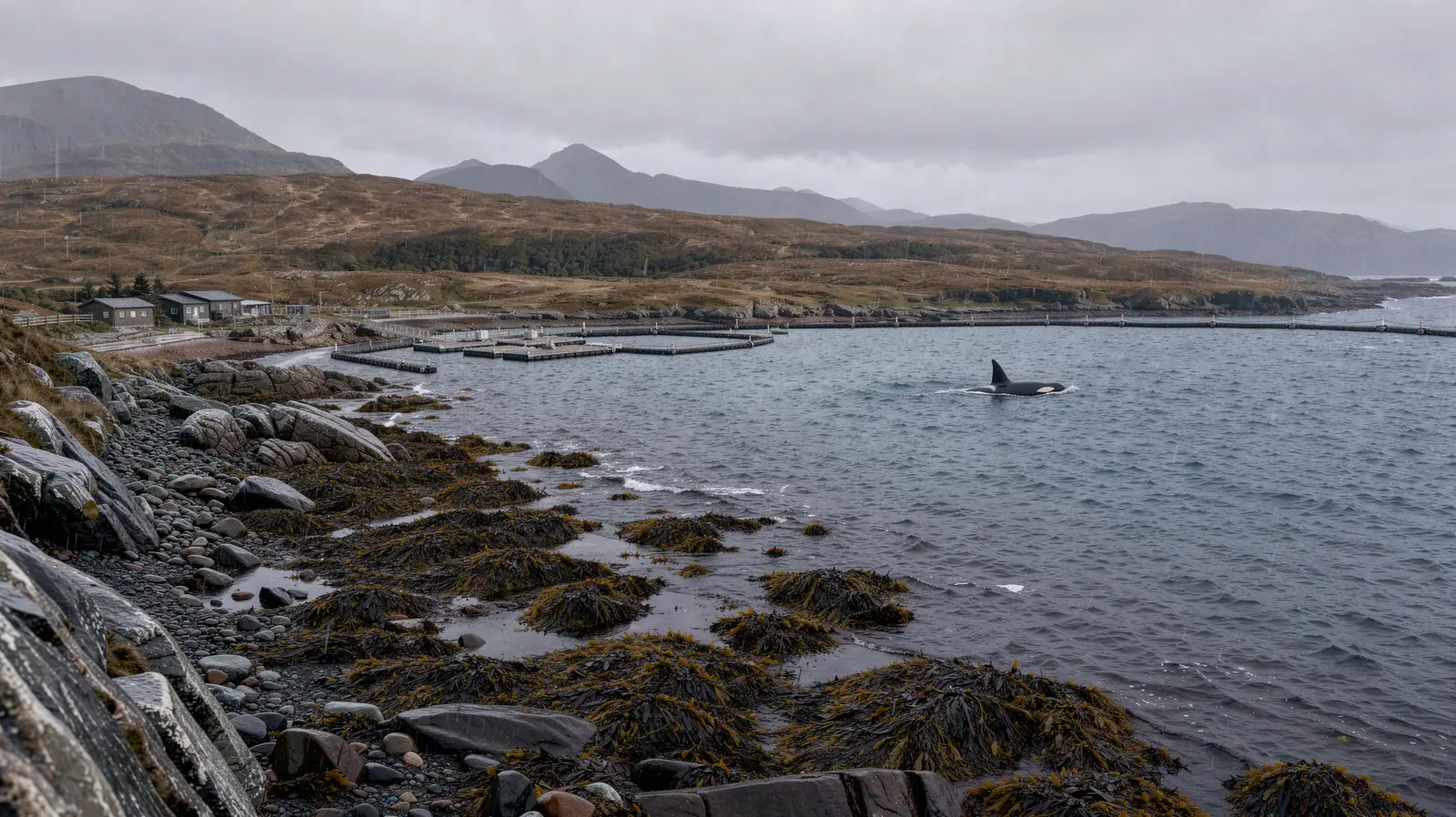
The images on this page are illustrative. No enclosure size, depth, net type or layout has been decided: these must come from the evidence. Proposal, p. 13 (opens the PDF in a new tab)

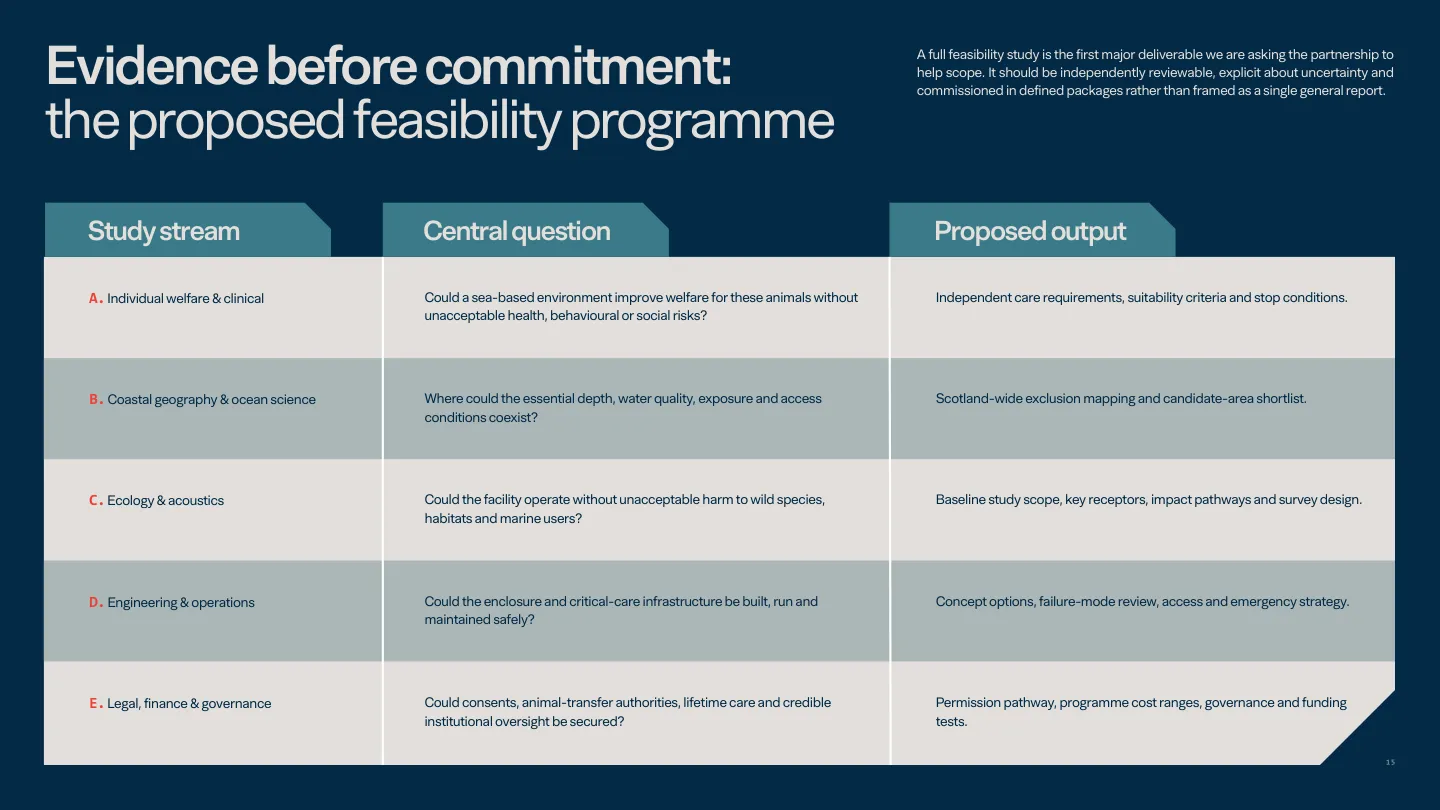
  • Concept visualisation: an orca swimming beneath the surface inside a sea enclosure, with hills on the shore beyond.
    Concept

    Open water.

    Natural tides, depth, currents and sound, with more space and choice. Possibilities to test, not promised outcomes.

  • Concept visualisation: two carers on a floating platform beside an orca at the surface.
    Concept

    Care, every day.

    Feeding, veterinary care, monitoring and protection would continue every day, for the rest of their lives.

  • Concept visualisation: a smaller, sheltered area of water near a rocky shore, with an orca at the surface.
    Concept

    A place to intervene.

    A protected area to separate, examine, treat or shelter an animal. A design that gains space but loses safe intervention would fail.

  • Concept visualisation: a small land base of clinical and operational buildings above the enclosure.
    Concept

    Built around them.

    Depth, layout, temperature, diet and social contact designed for Wikie and Keijo as individuals, not for a species in the abstract.

The project would use the Global Federation of Animal Sanctuaries’ 2023 standards for cetacean sanctuaries as its reference, aiming to meet and, where possible, exceed them.

Referring to these standards does not mean the Global Federation of Animal Sanctuaries has accredited, approved or endorsed the project. Proposal, p. 13 (opens the PDF in a new tab)

What it isn’t

  • Not A marine park.
  • Not Performances.
  • Not Breeding.
  • Not Public swimming.
  • Not Commercial display.
  • Not Release into the open ocean.

What it is

A permanent commitment to supported, lifelong care, subject to independent evidence that it would meaningfully improve their welfare.

Any public education would take place away from the animals. Any on-site access would always come second to welfare, conservation law, privacy and biosecurity. Proposal, p. 13 (opens the PDF in a new tab)

Where the project stands

Proposal issued 4 November 2026. p. 36 (opens the PDF in a new tab)

  • Feasibility stage.
  • No site selected.
  • No transfer agreed.
  • No construction commitment.
  • No established delivery entity.

Independent evidence may lead the project to progress, revise or stop.

The welfare of the animals must determine the sanctuary. Not the other way around.

We are committed to testing the premise, not assuming the conclusion.

Independent cetacean veterinarians, welfare scientists and marine specialists would judge whether any proposed arrangement could offer measurable benefits over the realistic alternatives, including the risks of moving the animals at all. A conclusion not to proceed would be a valid and useful result. pp. 6, 25 (opens the PDF in a new tab)

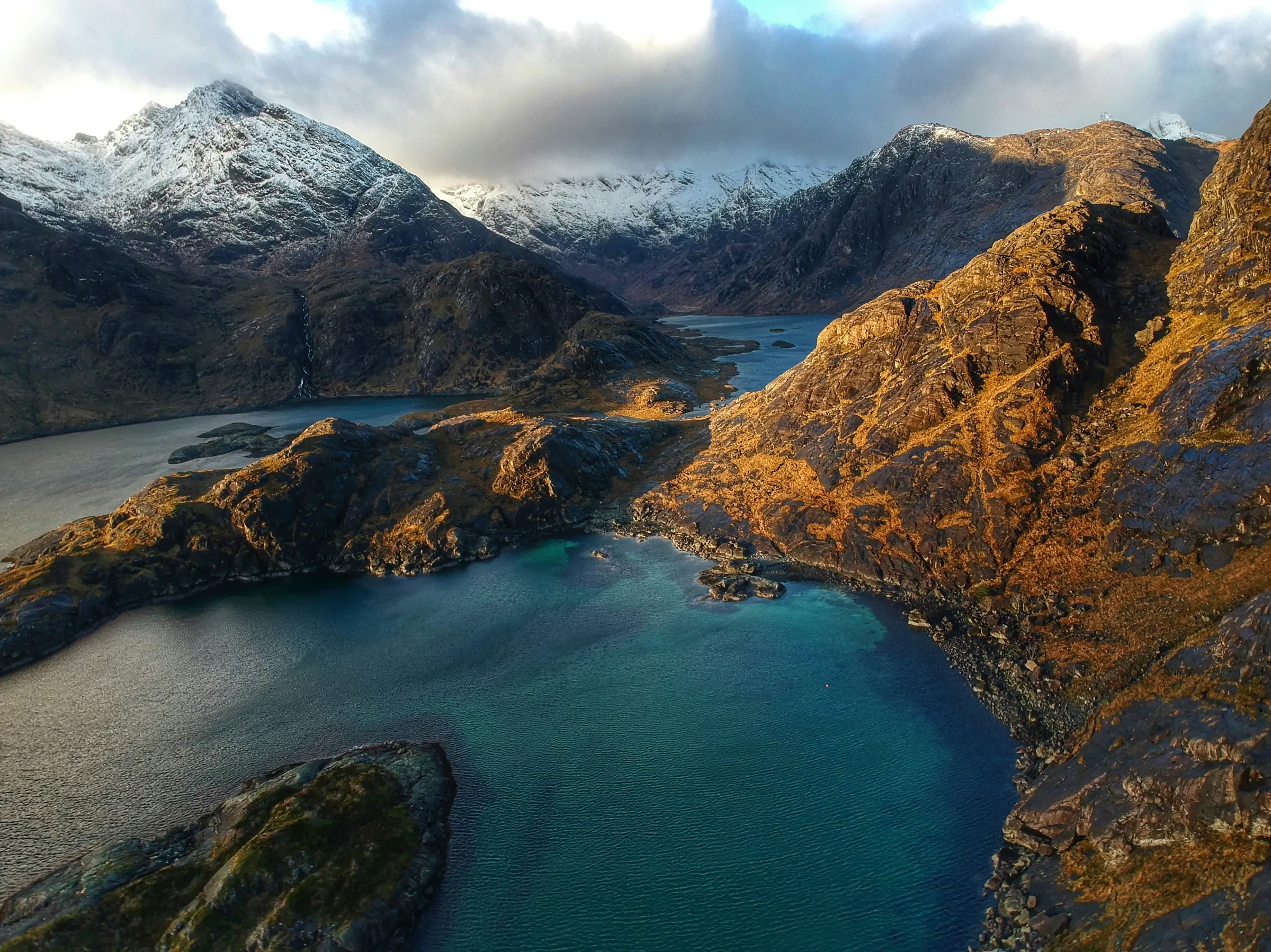
A deep sea loch between steep mountains, lit by low sun.

The location will be selected by exclusion and evidence, not by scenery.

Why Scotland is being investigated.

Scotland has a varied coastline, sheltered sea lochs, a strong marine research community and statutory frameworks that require projects to address their effects on wildlife and the sea. That makes it worth assessing. It does not prove a suitable site exists, and no coastline, community or sea loch is being proposed. Proposal, p. 11 (opens the PDF in a new tab)

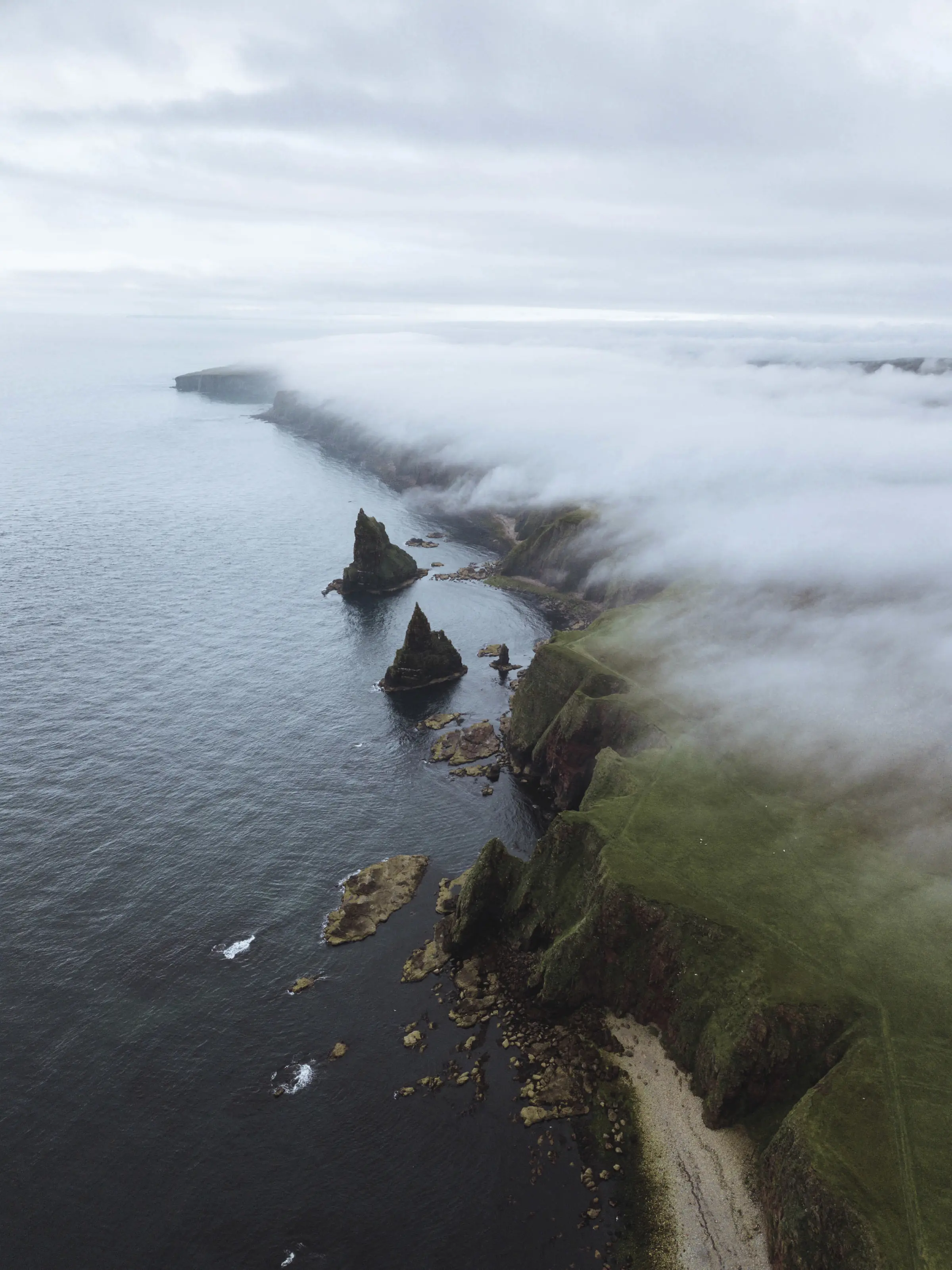
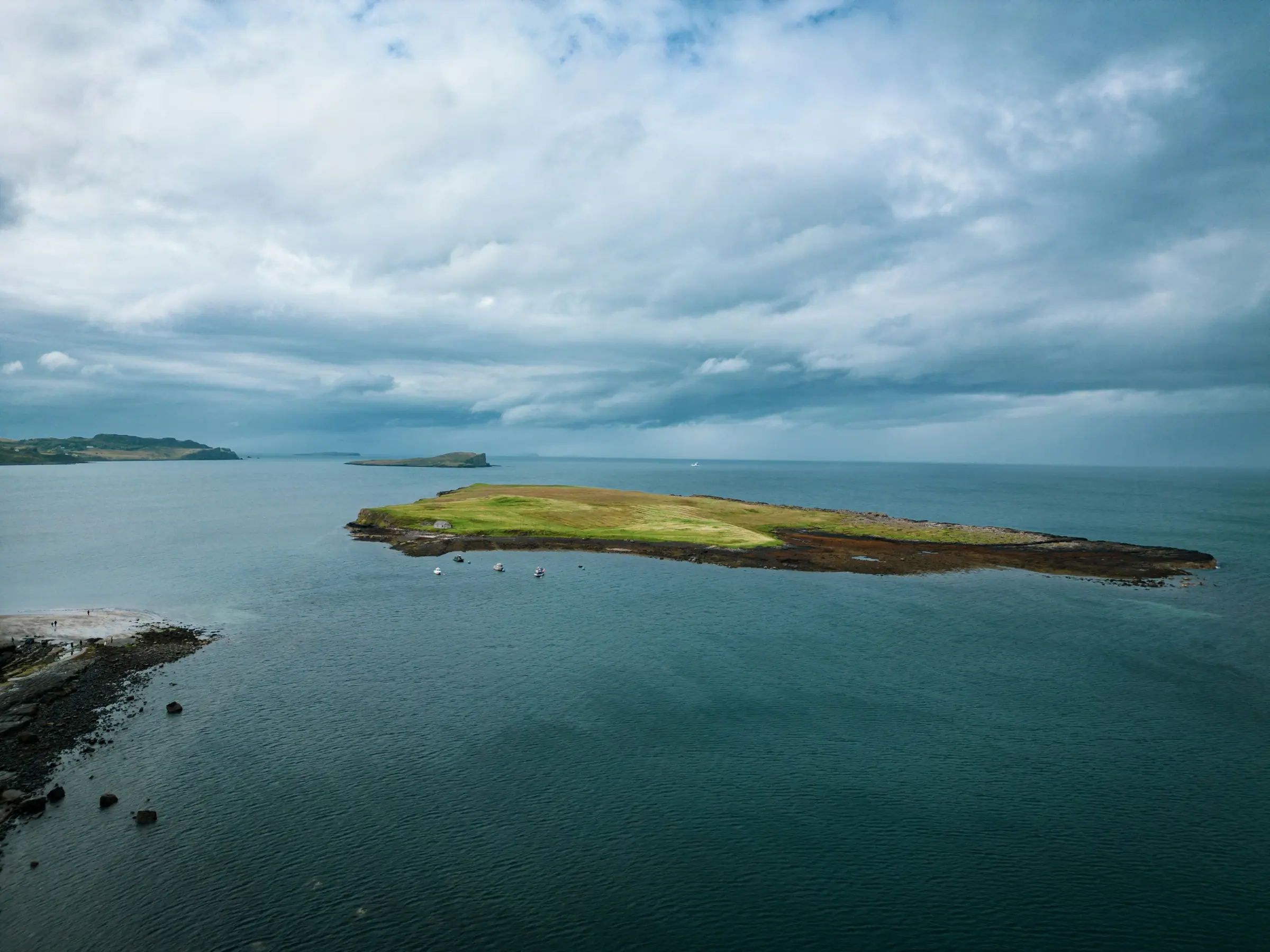
Sea stacks off a green, mist-covered headland on the north coast of Scotland, seen from the air.
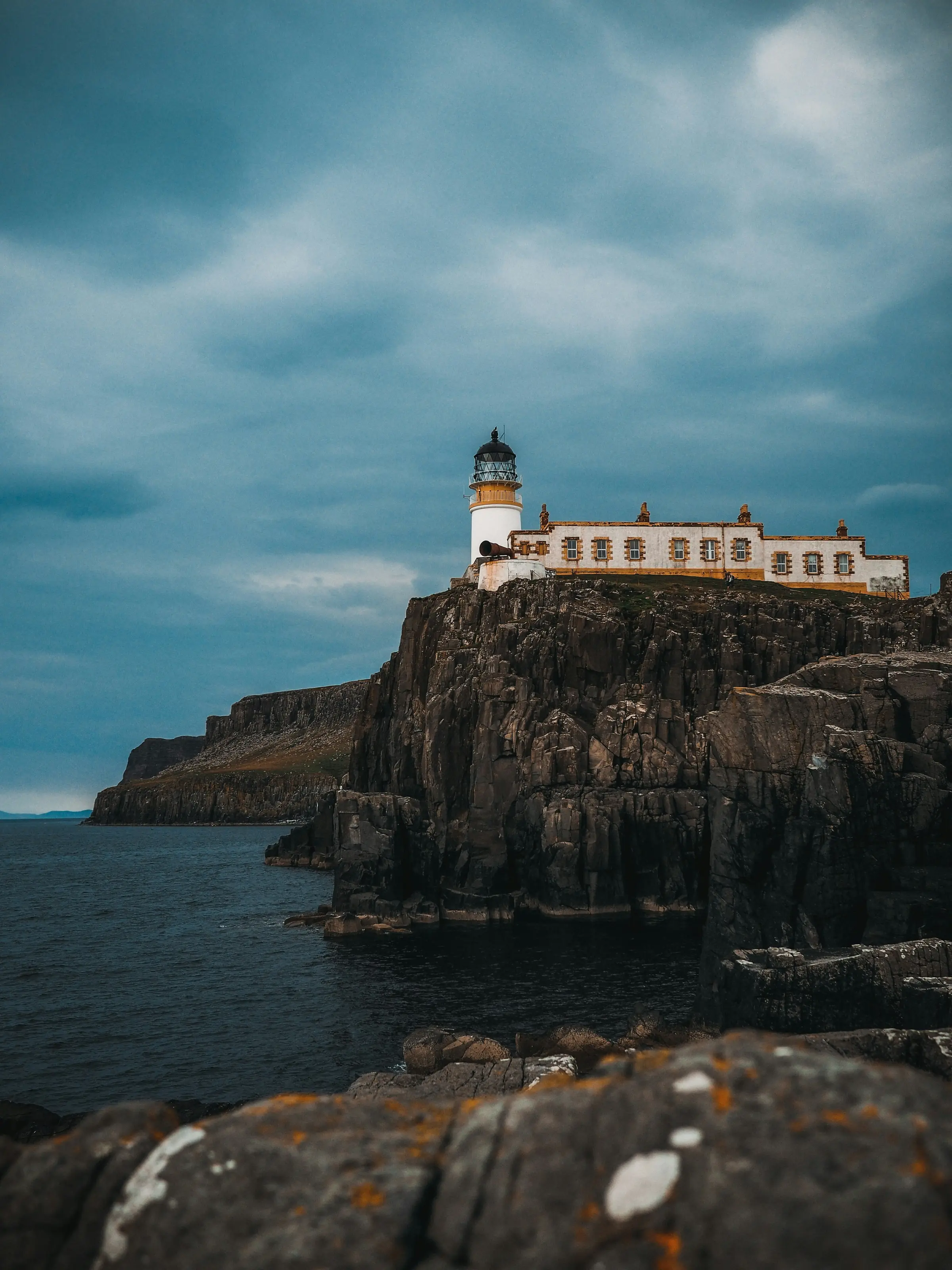
A white lighthouse on top of dark basalt cliffs above the sea, under a heavy sky.

Scottish coastline, for illustration. Neither is a proposed site.

Why it is worth assessingWhat it does not yet prove

A varied coastline, with sheltered sea lochs and other coastal formations.

That any site is suitable. None has been selected.

Established expertise in marine mammal science, oceanography and underwater acoustics.

That wild orcas in Scottish waters mean captive-born orcas would thrive there.

Practical experience of installing, operating and regulating marine infrastructure.

That cold, storms, tides and seabed conditions are manageable. Any of them could rule a site out.

Mature planning and environmental systems, guided by the National Marine Plan.

That consents could be secured, or that Scottish waters would suit Wikie and Keijo as individuals.

A fundable first step.

Early funding would pay for evidence, not a sanctuary: five pieces of work designed to reach a defensible conclusion, including a recommendation not to build.

  • Scientific and clinical framing

    Would produceReviewed research questions, animal-specific information needs, an evidence-gap note and a peer review plan.

    Must answerCan the project describe precisely what a viable welfare outcome would require?

  • Coastal constraints

    Would produceA data inventory, national-level exclusions, plausible area categories and priority surveys.

    Must answerIs there a rational basis to commission location-specific work?

  • Regulatory triage

    Would produceAuthorities and classifications to confirm, jurisdiction and transfer questions, and a preliminary consent sequence.

    Must answerCould the concept fall within an attainable approval and custody pathway?

  • Concept

    Engineering and operational concept

    Would produceA high-level view of enclosure, critical care, access, utilities and emergency operations.

    Must answerAre the likely hard constraints understood well enough for an indicative cost model?

  • Concept

    Funding and governance

    Would produceAn itemised next-stage plan, costing assumptions and ranges, and viable governance options and safeguards.

    Must answerIs there a fundable next stage with named experts, outputs and boundaries?

Intended outputs, to be finalised with the scientific and technical leads once appointed. Not confirmed contracts. Proposal, p. 35 (opens the PDF in a new tab)

No funding target yet. A figure would be premature before the work is scoped and quoted. Proposal, p. 28 (opens the PDF in a new tab)

Not a construction pledge. It does not secure a site, a sanctuary or a transfer. p. 32 (opens the PDF in a new tab)

Five proposed stages. No automatic step from one to the next.

  1. AScoping and partnerships
  2. BComparative feasibility
  3. CSite-specific development
  4. DConsents, construction and commissioning
  5. EAny animal transfer

Each stage goes ahead only if earlier evidence justifies the cost and commitment. pp. 24–25 (opens the PDF in a new tab)

Help shape their future.

The first goal is an independently informed, costed feasibility process, with explicit reasons to progress, revise or stop.

That work depends on people who know far more than we do about marine mammals, veterinary care, the sea and the law, and on funders willing to back evidence rather than a promise.

  • Contribute your expertise

    Marine mammal scientists, veterinarians, welfare specialists, oceanographers, acousticians, marine engineers, legal and regulatory advisers.

    Help define the evidence, identify hard constraints early, or scope a work package. Evidence that changes or disproves the proposal counts as progress.

    Offer expertise (opens your email app)
  • Fund the feasibility work

    Charitable foundations, philanthropists, animal-welfare funders and mission-aligned sponsors.

    Support a restricted, independently reviewed feasibility commission. Your funding would pay for evidence, including a possible recommendation not to build.

    Discuss funding (opens your email app)
  • Open a dialogue

    Public bodies, Marineland and French counterparts, welfare and conservation organisations, coastal communities and the press.

    Procedural guidance, constructive scrutiny, a confidential conversation about the animals’ needs, or a question. A response is not an endorsement.

    Start a conversation (opens your email app)
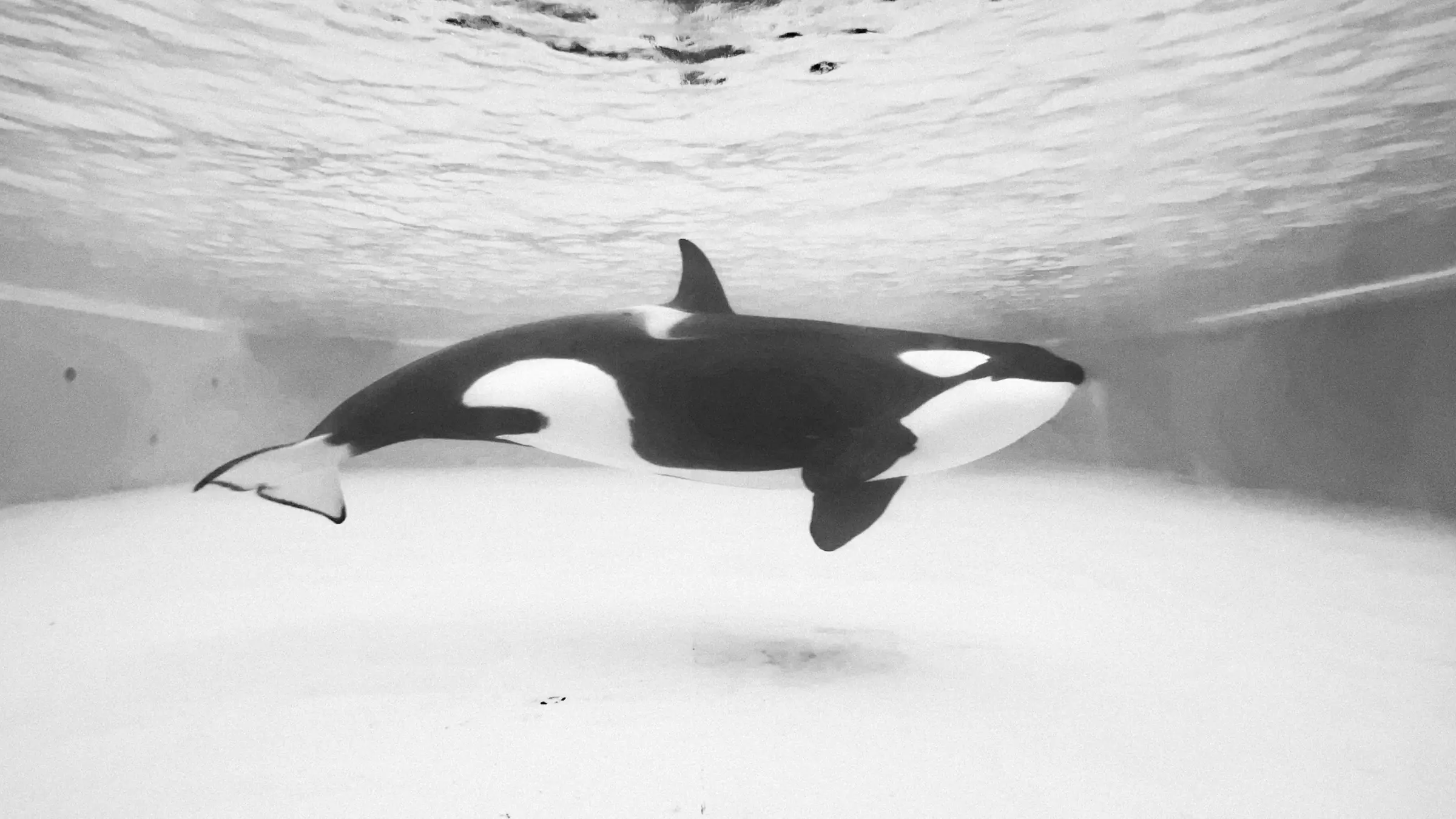
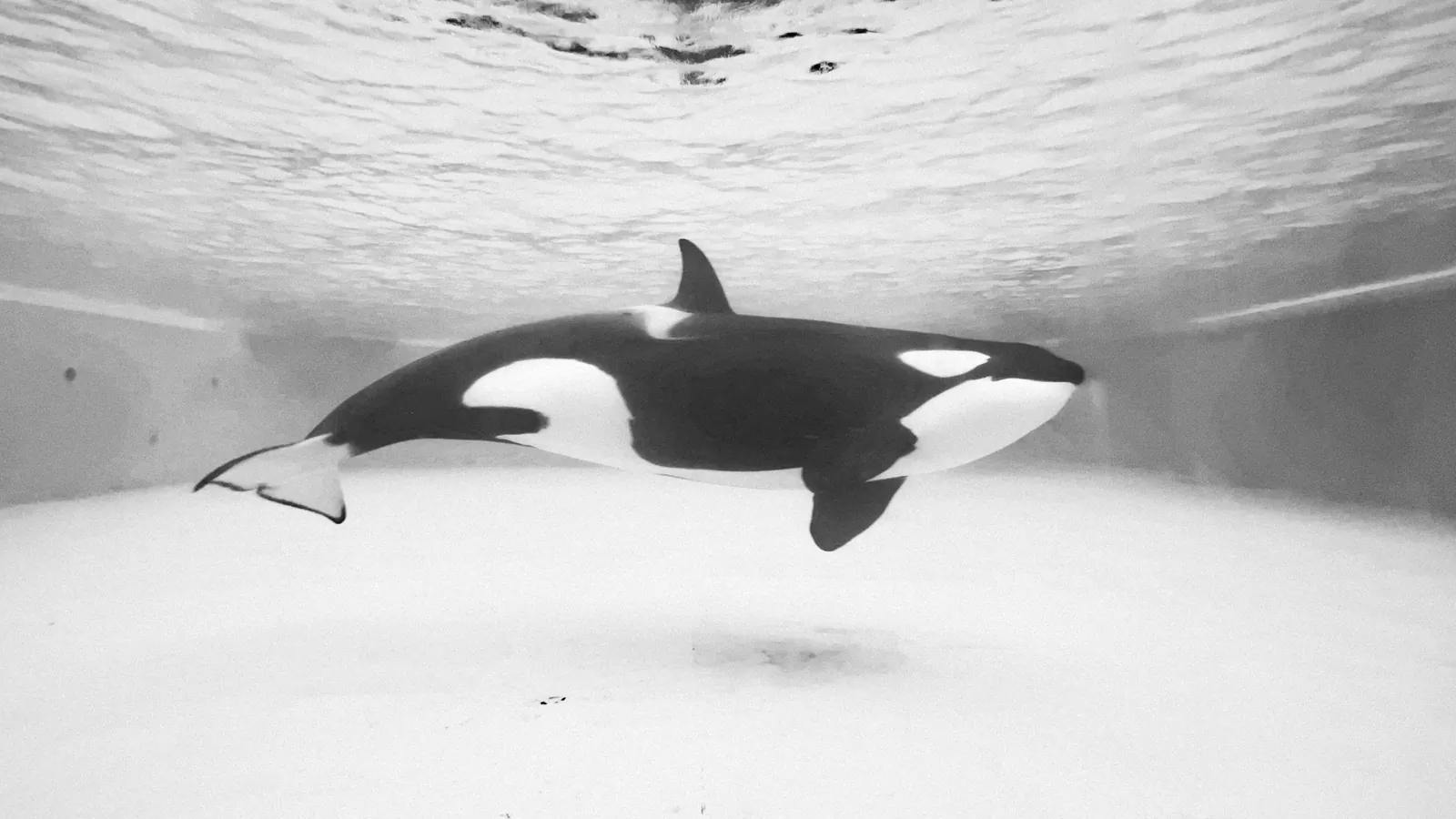
A black-and-white underwater photograph of an orca suspended in the still water of a bare concrete pool.

Not another marine park. Not a promise of freedom. A commitment to finding something better.